Curious what you could save?
Enter your postcode and receive a no-obligation proposal within 24 hours.
Where can we help you even more?
Discover our sustainable energy services, from solar panels to commercial energy storage.

The Dutch electricity grid is full. Grid congestion means that at certain moments more electricity is demanded or fed back than the network can handle. The result: 14,044 businesses are on the waiting list for a heavier grid connection, with a combined demand of 9 GW (according to Netbeheer Nederland, 2025). The economic damage amounts to EUR 10-35 billion per year in missed opportunities (according to the Dutch government/VEMW, 2025). And grid reinforcement takes an average of 4 to 7 years. On this page you'll find out what grid congestion is, why it exists, which regions are hit hardest, and what you as a business owner can do about it. Clear, concrete and without jargon.
Inzicht in 30 seconden · Vrijblijvend
This isn't an abstract problem. It affects your business directly: you can't expand, you pay higher transport costs, and your sustainability plans stall. In regions with many solar panels, three-quarters of business plans can't proceed on schedule (according to VEMW, 2024). Yet most business owners don't fully understand what transport scarcity is, how it works, and what solutions exist. That's a problem. Because if you don't understand it, you can't anticipate it. On this page we explain it clearly, including causes, consequences and concrete steps you can take as a business owner. So you don't just wait for the grid to get stronger, but take control of your energy situation with smart energy management.
Free quickscan — we analyse whether the full grid affects your business and which solutions fit
Grid congestion — or transport scarcity — means the electricity network has to transport more electricity at certain moments than the cables and transformers can handle. The grid works like a motorway: at peak times it's jammed. This is happening more and more frequently, because more and more solar panels are feeding electricity back to the grid and more and more heat pumps, EV chargers and data centres are demanding it. The grid was once designed for one-way traffic: from power plant to home. Now traffic needs to flow in both directions, with peaks that nobody foresaw.
There are two forms of transport scarcity. Offtake congestion: more electricity is demanded than the grid can supply, for example on cold winter days when all heat pumps are running. Feed-in congestion: more electricity is fed back than the grid can process, for example on sunny spring days when all solar panels are producing at full capacity. Both types affect businesses in practice, because grid operators have to divide capacity among an ever-growing number of users.
The Dutch electricity grid was designed at a time when energy flowed from a few large power stations to millions of households. One-way traffic. The energy transition has fundamentally changed that model. Now millions of rooftops produce electricity, hundreds of thousands of cars charge up, and heat pumps heat more homes and commercial buildings than ever. The grid isn't keeping pace.
Inzicht in 30 seconden · Vrijblijvend
The problem isn't equally severe everywhere. The capacity map from Netbeheer Nederland shows which regions are most heavily loaded. On the high-voltage grid (TenneT, >110 kV) there are fewer bottlenecks than on the medium and low-voltage grid of regional grid operators like Stedin, Liander and Enexis. The problems concentrate in regions with many solar panels, agricultural activity and fast-growing data centres.
Inzicht in 30 seconden · Vrijblijvend
Grootschalige zonneparken en residentiële zonnepanelen veroorzaken extreme piekbelasting op het laagspanningsnet. Agrarische en industriële bedrijven worden het hardst geraakt
Hoge concentratie agrarische zonnepanelen. Het middenspanningsnet loopt tegen zijn grenzen aan. Drie op vier verduurzamingsplannen lopen vertraging op
Combinatie van grootschalige zonneparken en residentiële installaties. Toeristische en agrarische sector merken directe gevolgen
The concrete impact on operations and growth
Inzicht in 30 seconden · Vrijblijvend
Wil je extra machines, laadpalen of een warmtepomp? In congestiegebieden kun je geen zwaardere aansluiting aanvragen. De wachtlijst telt ruim 14.000 aanvragen met een gezamenlijke vraag van 9 GW (volgens Netbeheer Nederland, 2025). Wachttijd: 4 tot 7 jaar, in sommige regio's tot 10 jaar.
Netbeheerders investeren meer dan ooit in netverzwaring. Die kosten worden doorberekend in nettarieven. Netbeheerders verwachten dat nettarieven de komende jaren met circa 5% per jaar stijgen (volgens Energie-Nederland, 2025). Dat loopt in 2040 op tot een verdubbeling.
Zonnepanelen op je dak, maar je mag de stroom niet terugleveren? In regio's met invoedingscongestie worden zonnepanelensystemen beperkt in hun teruglevering. Dat raakt je businesscase direct.
Uitbreiden, een tweede locatie openen, of je productie elektrificeren? Zonder netverzwaring is dat niet mogelijk. De economische schade: € 10-35 miljard per jaar aan gemiste baten voor heel Nederland.
Vanaf 1 januari 2026 gelden nieuwe regels rondom congestiemanagement. Bedrijven in congestiegebieden moeten deelnemen via CBC-contracten (Capaciteitsbeperkingscontract) of CSC-contracten (Capaciteitssturingscontract). Wie dat niet doet, loopt risico op een laag-prioritaire wachtlijstpositie.
Waiting for grid reinforcement isn't an option if your business needs to grow now. There are solutions you can deploy today. From simple behavioural changes and curtailment to smart investments in energy storage and energy management. Businesses above a certain consumption level also fall under the Dutch energy saving obligation (energiebesparingsplicht). The steps below run from low-threshold to structural.
De eenvoudigste maatregel: verplaats energieverbruik naar momenten dat het net rustig is. Machines laten draaien in de avond, EV's laden buiten de spits. Met slim laden kun je 68% meer ruimte creëren op het stroomnet. Geen investering nodig, wel een dynamisch energiecontract.
Netbeheerders bieden contracten aan waarmee je flexibel vermogen beschikbaar stelt. Met een Capaciteitsbeperkingscontract (CBC) beperk je je afname of invoeding op piektijden, tegen een vergoeding. Geen kapitaalinvestering, wel directe opbrengsten.
Een batterijsysteem (BESS) slaat stroom op wanneer het net rustig is en levert wanneer je bedrijf piekt. Resultaat: pieken 30-70% lager, meer capaciteit binnen je huidige aansluiting. Investering: € 60.000-80.000 voor 100 kWh. Met EIA (40% fiscaal voordeel) en Flex-E (tot 40% subsidie) is de netto-investering aanzienlijk lager.
Een EMS stuurt je hele energiesysteem centraal aan: zonnepanelen, batterij, laadinfrastructuur en warmtesysteem. Het systeem optimaliseert automatisch op basis van dynamische prijzen, netbelasting en je verbruiksprofiel. Indicatieve besparing: 10-30% lagere energiekosten (volgens Sensorfact). Resultaten hangen af van je verbruiksprofiel en tarieven.
Wij analyseren je verbruiksprofiel, netaansluiting en regio. Je ontvangt een concreet advies: welke oplossingen passen bij jouw situatie, wat de investering is, en wat de verwachte besparing. Gratis en vrijblijvend.
Read our articles on home batteries, net metering and energy savings.
The investment depends on your business size and which solutions you combine. A few realistic scenarios. A 100 kWh energy storage system costs EUR 60,000-80,000 (according to DENS, 2025). With EIA (40% tax benefit) and Flex-E (up to 40% subsidy, max EUR 300,000) the net investment can fall below EUR 40,000. A smart energy management system costs EUR 5,000-50,000, depending on complexity. Participation in congestion management via CBC contracts costs nothing — it pays. *All prices listed are indicative. The final price is set after a personal assessment.* *Subsidy rules and amounts can change. Final approval is always subject to RVO's decision. Subsidies are never guaranteed.*

Inzicht in 30 seconden · Vrijblijvend
Many business owners assume grid congestion will solve itself once the grid operator reinforces the network. That's true in the long run. But the reality is that 60% of grid projects run behind schedule. The question is: can you wait 4-7 years?
| Criterion | Anteas | Others |
|---|---|---|
| Tijdlijn | Vandaag starten, binnen 8 weken operationeel | 4-7 jaar wachttijd, vaak langer |
| Investering | € 40.000-80.000 (met subsidie netto lager) | Nettarieven stijgen 5% per jaar |
| Groeiruimte | 30-70% piekverlaging binnen huidige aansluiting | Geen uitbreiding mogelijk tot netverzwaring |
| Extra inkomsten | Peak shaving, onbalansmarkt, congestiemanagement | Geen |
| Regie | Zelf sturen op energieverbruik en -kosten | Afhankelijk van netbeheerder en overheid |
| Subsidie | Flex-E tot 40% + EIA 40% (anti-cumulatieregels van toepassing) | Niet van toepassing |
| Risico | Terugverdientijd 3-5 jaar, daarna pure besparing | Onzekerheid over planning en kosten |
Inzicht in 30 seconden · Vrijblijvend
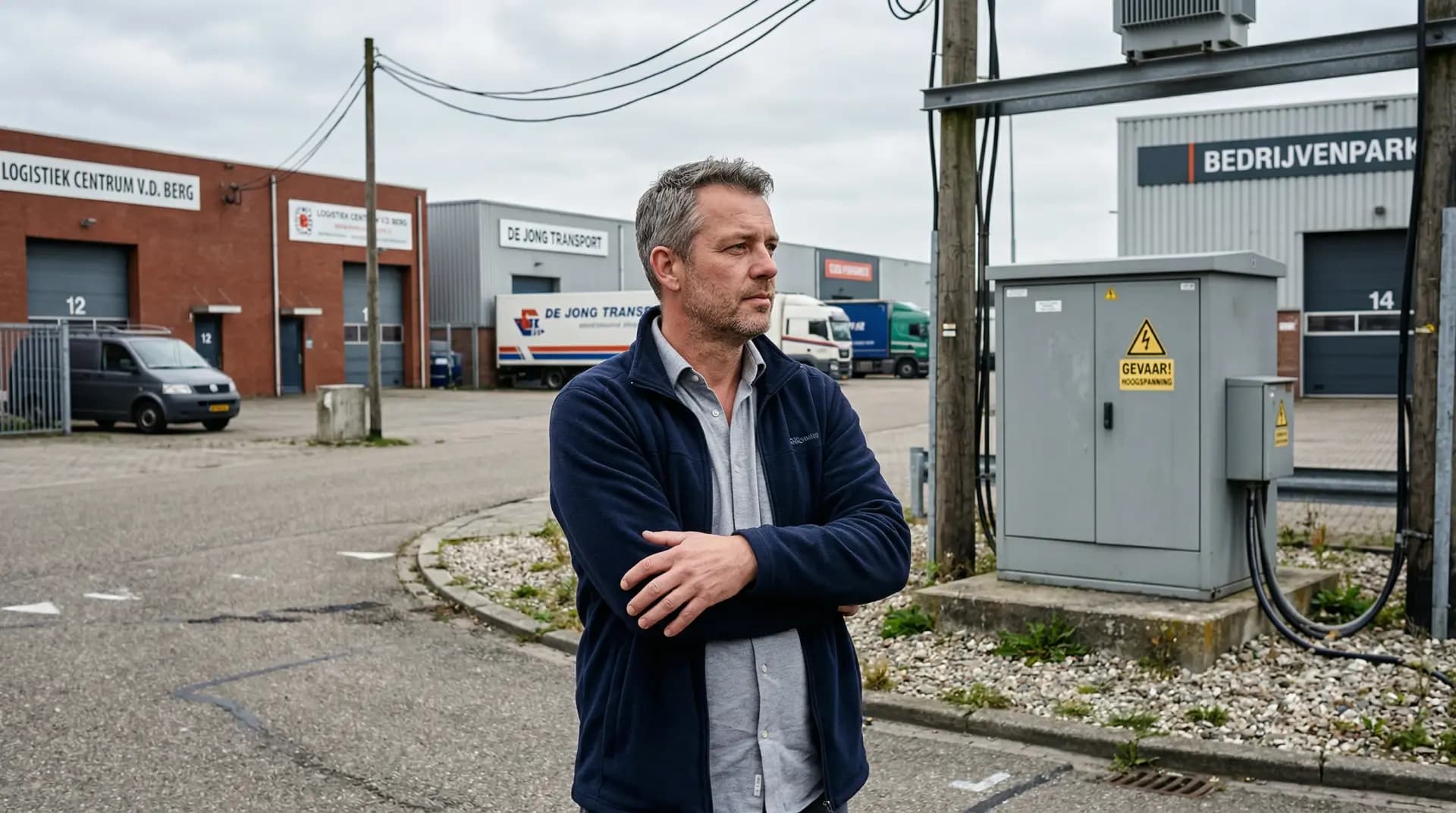
The full electricity grid doesn't only affect large industrial companies. In practice, more and more SME owners are finding their plans blocked by capacity problems. Do any of these situations sound familiar?
As of January 1, 2026, the new Dutch Energy Act is in force. It replaces the Electricity Act from 1998 and the Gas Act from 2000. For businesses in congestion zones, the following changes are concrete. Grid operators are no longer obligated to immediately realise connections when there is congestion. The ACM prioritisation framework determines who gets priority: congestion relievers (businesses that reduce grid load) come first. From July 1, 2026, all applications go on the same waiting list, regardless of company size. Businesses that invest in energy storage or congestion management get a better position. Waiting is literally rewarded with a lower priority.
Inzicht in 30 seconden · Vrijblijvend

Only brands we stand behind









Don't see your question here? Feel free to get in touch and we'll help you further.
The capacity map from Netbeheer Nederland (capaciteitskaart.netbeheernederland.nl) shows available transport capacity per region and voltage level. The map is regularly updated by TenneT (high voltage), Stedin, Liander and Enexis (medium and low voltage). The most heavily loaded regions in 2025-2026 are Flevoland, Noord-Brabant, Overijssel and Zeeland. In these areas both offtake and feed-in capacity are limited. For businesses in a red-marked zone, acting immediately is most urgent. We check your situation for free during a quickscan and advise on which solutions deliver the most within your region and consumption profile.
Every business and region is different. We analyse your consumption profile, grid connection and location. You receive concrete advice with solutions, investment estimate and expected savings. No obligations, no sales pitch. Want to talk through your situation first? We handle everything from analysis to installation.
Inzicht in 30 seconden · Vrijblijvend
Laatst bijgewerkt: 3 april 2026
 Geschreven door Laurens Goeree · Energie-adviseur